Episode Transcript
[00:00:00] Speaker A: Let's go. Game economist cast episode 50. 49.
[00:00:08] Speaker B: I think we're on 50. I think we're on 50 dot 49
[00:00:10] Speaker C: was a big day. Big 50.
[00:00:13] Speaker B: The big five. Zero, baby.
[00:00:14] Speaker A: I didn't wear my. My 50 shirt. Life starts at 50.
[00:00:18] Speaker C: We've been waiting for this moment.
[00:00:19] Speaker B: You have a shirt about being 50 years old.
[00:00:21] Speaker C: Yeah, we don't know. I've got confetti. I've got those. I've got confetti. The coins from our game that we played at GDC. I. I can just.
[00:00:31] Speaker A: No, it's 49.
[00:00:31] Speaker C: I'll make a big mess.
[00:00:32] Speaker A: It's 49 because I do not number the bonus episodes.
[00:00:37] Speaker C: It's a good thing I didn't throw all these.
[00:00:39] Speaker B: All right, we'll say the celebration.
[00:00:40] Speaker A: Different. Different qualitative bar. Let's start with utility. I don't understand what it even means.
[00:00:48] Speaker B: Everybody has some kind of utils in their head that they're calibrating.
[00:00:52] Speaker A: There's hardly anything that hasn't been used for money. In fact, there may be a fundamental
[00:00:57] Speaker C: problem in modeling that we don't want to model.
[00:01:01] Speaker A: All right, 49. Episode 49. We are here. We are in our respective locations today. I am Philip Black of Game Economist Consulting. I am joined today. We're gonna do. We're gonna do introductions by. From the. The fine man from California.
[00:01:16] Speaker B: Hey, my name's Eric. I do stuff on Marvel Snap Data science stuff. Used to be on League of Legends. Love rollerblading and Smash Brothers.
[00:01:24] Speaker A: I don't know.
[00:01:24] Speaker B: What do you want me to say?
[00:01:25] Speaker A: Sounds good.
[00:01:25] Speaker C: That's amazing. Yes, you do love rollerblading. I'm Chris. I am a game economist slash consultant slash vibe coder. Slash.
Some other stuff.
[00:01:37] Speaker B: Full time vibe coder.
[00:01:38] Speaker A: We have a wonderful topic to talk about today. In fact, there's actually two. One is Chris's recent substack on Game Free Labor. Yeah, I think that's going to be very key to a lot of people.
[00:01:50] Speaker B: The other piece is jobs to AI. Find out.
[00:01:53] Speaker A: Maybe. Maybe we should argue about that. The other piece is the Castro Nova paper we'll be talking about on virtual worlds. Remember Ed Cash over one of the first academics to really talk about games in a serious way? This is one of his key papers. It feels weird as the Game Economist cast that we haven't gone through his work seriously yet. And I think this is the first start of that. So I'm curious to discuss that. But before we do, talk about what we've been playing.
[00:02:20] Speaker B: Got a selection of good things on sale.
[00:02:23] Speaker C: Stranger.
[00:02:24] Speaker A: Eric.
Pokemon?
[00:02:26] Speaker B: Yeah, I've been playing Copia. It's.
It's good. I don't know what to say. Like, there's a lot of Pokemon slop games out there, but this one's pretty good. For those who don't know Pocopia, it's like Pokemon Topia. It's a town building game. It's got like elements of Minecraft and animal crossing. It's very cozy. You know, it's like you hang out with these Pokemon, you build little houses for them and they give each other gifts and stuff. In the backdrop, there's like a bit of a story. Like you wake up, all the humans are dead. The world is a wasteland. It looks like there's a giant natural disaster that destroyed the entire world and you're slowly bringing it back together by making it habitable again. I haven't gotten that far, so I don't know the full story, but you know, and there's kind of like a positive environmentalist image of like message of like, hey, let's rebuild habitats and restore the world. But yeah, it's, it's fun. I don't know, I've never, I'd never played Minecraft before. So this has like a lot of Minecraft like mechanics where you're like building stuff and mining.
[00:03:18] Speaker C: You never played Minecraft?
[00:03:20] Speaker B: No.
[00:03:21] Speaker A: Do you have a daughter?
[00:03:23] Speaker C: Kids Crazy to me.
[00:03:24] Speaker A: Yeah, at least. Do you hate Sweden? What do we do?
[00:03:28] Speaker B: I don't know. I just never played by. I think when it was hot, I was just spending all my time playing melee. Like I probably played it for like 20 minutes on someone else's computer once, you know.
Anyway, I had a lot of fun just like burrowing through tunnels and digging irrigation ditches and shit. And I was like, oh, this must have been why people like Minecraft.
[00:03:43] Speaker C: So this is not by Pocket Pair. I thought this game. I was like, oh, this is by Pocket Pair, the people who. Who's ripped off Pokemon. So it's like an open world.
It doesn't really look.
[00:03:54] Speaker B: It's like level based, but each level is sandboxy.
[00:03:58] Speaker C: What's the. Is it just premium? You buy it, buy it once.
[00:04:01] Speaker B: Is there any Nintendo?
[00:04:03] Speaker C: There's no. There's no merge mechanics with in game monetization and microtransactions.
[00:04:08] Speaker B: There are actually an interesting number of like daily quest style designs and like light async social features which seem like the sort of thing that show up in mobile games sometimes. But yeah, it's interesting how the systems design is different when it's a box price. These daily quests are purely a gameplay system. And they're not there to drive revenue. They're not there to drive engagement. Not directly.
And so they. Yeah, they have a very different vibe to them.
[00:04:32] Speaker C: That's interesting. It looks a lot like that. Jesus Christ. What is that game called?
[00:04:37] Speaker A: Animal Crossing.
[00:04:38] Speaker C: Animal Crossing, yes.
[00:04:40] Speaker A: Thank you.
[00:04:41] Speaker B: This is.
[00:04:41] Speaker A: This is what it's supposed to be. Is this the Pokemon cozy game everyone was promised? And if so, why is this not monetized? Why can't this be the mmo? Like, if you remember, there was Temtem and which is One of the MMOs that was by Spanish studio that tried to replicate the thing everyone has been asking for. There's been GBA games, there's been DS games, there's been Switch games. Why does this not exist? Like, what. What is. This is just like.
[00:05:03] Speaker B: Explain to you why a mainline Pokemon game doesn't do microtransactions.
[00:05:07] Speaker A: Can you take me through the core loop of the game? I'm very curious. How does Pokepoea work?
[00:05:11] Speaker B: Okay, so, yeah, so you show up in an environment, it's all busted and deserted. You know, all the grass is dead and all the trees are dead. And, you know, it's a ruined wasteland. And you go through and you are ditto. And you can. It was a Pokemon who can copy other Pokemon, so you can copy their abilities. So you can, like, you learn how to water the grass and make grass grow. You know, how to cut down trees and, you know, punch through walls to, like, dig. And so you work to restore the world, right? You're watering grass and making little habitats. You're making trees grow again. Making. Maybe you're. And some Pokemon will require special habitats. Like a bat might want to live in a cave or a, you know, some, you know, a beetle might want to live in a tree. That kind of thing. And as you go through, you restore the land, you rebuild the Pokemon center in the area, and then at some point, you, like, finish the level and you move on to the next area. So the starting area is like a. Like a grassy hilly zone. Another area is like a beach zone. So there's a lot of, like, puzzles involving sand. And there's another zone that's a mountain. So there's a lot of puzzles involving mining and, like, you know, getting iron ore and smith melting ingots. You know, that kind of stuff.
[00:06:13] Speaker A: So what. What is me getting additional Pokemon do?
[00:06:15] Speaker B: Yeah, good question. So. So you build a habitat, let's say some grass next to a tree. And it's like a shady tree grass habitat. And then a Pokemon will show up, let's say a Scyther, who's like, you know, the bug with the arms, and he's like, hey, I'm Scyther. Nice to meet you. This is a great spot. And some of the Pokemon can do stuff to help you. So Scyther can cut logs and convert logs into lumber, which you can use to craft stuff. Other Pokemon might help you build buildings or help you water the grass or help you grow things or light things on fire. Right.
[00:06:43] Speaker A: So the Pokemon Easter represent a worker with, like, a certain work stream that they can take.
[00:06:48] Speaker B: Yeah, yeah. The. You. The Pokemon have abilities that you need to do things to complete tasks, and so you attract the Pokemon. The Pokemon unlock new abilities for you. You use them to complete more tasks, which help you attract more Pokemon.
[00:07:01] Speaker C: It actually sounds a lot like Pal World.
It's like, the exact same mechanics.
[00:07:05] Speaker A: That's exactly what I was thinking of, Chris.
[00:07:07] Speaker B: There's a lot less, like, assembly line stuff. But, yeah, I would say it's a very similar vibe of, like, building this town of Pokemon. And they're doing stuff to help you.
[00:07:15] Speaker C: So.
[00:07:16] Speaker A: Chain.
[00:07:17] Speaker B: Chain.
[00:07:17] Speaker A: Yeah. So, like, when we think about, like, getting different objects, crafting rules, it could be we need to produce this thing, which makes this thing. Which makes this thing. Are there in those long production chains that you have to get going and automate?
[00:07:30] Speaker B: No, not really. Yeah, they're like, one or two steps, tops. Yeah.
[00:07:34] Speaker A: Okay. So pretty. Pretty short chains. So why do I want different Pokemon? Like, when I have one? Scyther, am I done? Then why do I want another one? Once I filled up my lines, my employee stations are filled.
[00:07:45] Speaker B: Yeah. So there's some progression systems that, like, you know, your level goes up as you get more Pokemon and make them happy. Oh, yeah, yeah. Making the Pokemon happy is part of it, too. So, like, Scyther might want toys to play with, so you can make some toys and put it near his habitat, and it makes him happier. And your goal is to, like, raise the Pokemon's happiness level to unlock stuff. But honestly, a lot of it is just. It's just fun to, like, oh, who's in the bushes? Oh, it's Heracross. Whoa. What a cool Pokemon. Yeah, you know, it's just. It's the joy of having new Pokemon appear.
[00:08:13] Speaker A: And can you accelerate, though?
[00:08:16] Speaker B: Yeah. You know, if you're efficient at building
[00:08:17] Speaker C: and stuff, then there's no, like, mechanics that you could pay for because they don't have microtransactions. Was. So it's like. Is it kind of like a 4x game where you're exploring, exploiting or is it.
[00:08:29] Speaker A: I don't think there's an extinguish, is there?
[00:08:32] Speaker B: Yeah, extinguish.
[00:08:33] Speaker A: It's a 3S baby.
[00:08:34] Speaker B: There's no combat, at least not that I've encountered. It's, I would say it's a cozy game with like Minecraft sandboxy mechanics.
[00:08:42] Speaker C: Hmm. It doesn't sound like Minecraft, but I, But I think that's just because you've never played Minecraft before.
[00:08:47] Speaker B: Yeah, that's also entirely possible.
[00:08:49] Speaker C: Just kidding, just kidding.
[00:08:50] Speaker B: I will admit that I've been talking out of my ass every time I say anything about Minecraft.
[00:08:54] Speaker C: No, that. It sounds, it sounds interesting. It sounds like a lifestyle game. Like you just kind of play it over and over again for hundred. Is there an end. Is there like an arc? Does it. Do you get.
[00:09:04] Speaker B: Yeah, yeah. So there's like four or five levels.
[00:09:07] Speaker C: Okay.
[00:09:08] Speaker B: And then there's like the end game zone where you kind of just do whatever you want. Do whatever which is, you know, like in Minecraft, you again speaking based on my lack of understanding. You know, you go through like the survival mode where you had to like you're trying to survive and like, like resource constraints are a real problem. And then when you reach end game, it's just like whatever, build whatever you want.
[00:09:24] Speaker C: Is it weird to me that I look at this game and I feel like $70 is overpriced and I look at GTA 6 and I.
[00:09:31] Speaker B: That's a pretty good price and whatever, you're a cheapskate. That's fine.
[00:09:33] Speaker A: Different, different genres. I don't think they're substitutes. I don't think GTA is a substitute for Pokepia.
[00:09:39] Speaker C: No, no, they're not. But you know, but a boat is not a substitute for a car. But you know, I would still. If I see like a $30,000 boat versus a $30,000 car, I'm able to make like, oh, that seems pretty expensive for a boat.
[00:09:51] Speaker A: I mean, look, people, people are still playing games like Dynasty warriors instead of, you know, higher quality shooters. Like, they're still playing like these Eastern European FPSs instead of like CSGO.
[00:10:02] Speaker C: Yeah, but I, I just think it's interesting that there's no variation in price among these premium products. At least at the AAA level.
[00:10:10] Speaker A: There, there is. I mean Arc Raiders came out at $40. Marathon was 40. Helldivers is 40. Like there has been a growing mid price premium segment which newzoo talked about in their most recent 2025, but all
[00:10:22] Speaker C: of those have microtransactions in them. They all have. Or they all have additional spend, you know.
[00:10:27] Speaker A: True, true. You mean like more of a single player $40 price point? Yeah.
[00:10:31] Speaker C: And I guess GTA 6 is probably going to have in app purchases as well. Of course. You know, I don't know. I like, I look at some of these, I guess Breath of the Wild compared to this. Like in my head, the value of Breath of the Wild is much higher than the value of this game. And it's just interesting that that like
[00:10:47] Speaker B: there's this weird phenomenon where there's like a lot of price standardization between products that are very different. Like the quality of Breath of the Wild and the content is so much more than compared to like a mainline Pokemon game. Right. They've been recycling the same formula for like decades now. And like not like the games are that polished or anything. Yeah, I don't know. Yeah, a lot of things that are very different matter quality are priced the same.
[00:11:08] Speaker C: Well, it looks like a cozy game. I won't be playing it because I don't have Switch.
But Phil, I'm sure you've been playing a mobile game that I do have on my phone or can have.
[00:11:18] Speaker A: Speaking. Speaking of cozy, I have written a piece that I want to write for a very long time which is called the Economics of Merge Games. Or specifically I'm talking about Merge 2. And if people are not familiar with Merge games, it's different than Match three. It's called Merge two. And the reason it's called Merge two is the way the core gameplay works is that when you have two objects on the game board and you lay them on top of one another, they merge into a higher level item. And the reason you want to keep merging into higher level items is that you have an order queue that sits above the board and that has a number of items that you need to satisfy that order request. Once you satisfy that order request, you are rewarded with meta coins. And meta coins are important because what they're going to enable you to do is to progress along the story and also unlock a lot of key rewards. So you want to be able to merge those items up, satisfy the order requirements, collect the coins from completing the orders, and then ultimately claim the rewards by leveling up. It also advances a meta story. The story is really important. Players love the narrative of these games. So the thing that's really different about this economy than all the other ones that have come before it is that you actually really have to price this in a base economy because there is a exponential increase in the number of items or base items you need as you start to merge things up. Because remember to for instance go from like level seven, from level six. That means you need two level six items. Level six items are instead four or two level five items, which are two. You know, you go down the chain, you can see how this increases dramatically.
[00:12:51] Speaker C: And you have 12 levels for items in this game.
[00:12:54] Speaker A: Yes, yes, yes. So you could be talking about thousands of merges to be able to get and satisfy a order that has like a level 12 item. We'll talk about how they solve that. But that is an element of the.
[00:13:07] Speaker B: So this is like 2048, just like with way more systems around it.
[00:13:11] Speaker A: 48. What do you mean?
[00:13:12] Speaker C: It's the one where you've got that like four by four grid and you've got to swipe up, down, right, left to combine the blocks. Two twos make a four, two fours make an eight.
[00:13:21] Speaker A: Yeah, yeah, you're just merging, you're merging them together. But like there are twists that come with this because the question is like what, what is the saying? So first of all, just to be clear, that also follows with the cost of items, which is one of the first things you'll notice about these economies is that because you have that exponential curve that means that you need to spend an exponential amount of hard currency to be able to satisfy that. And so that's where they create a lot of spend depth is oh my God, there are a bunch of orders that require very high level items. That's a lot of merging you have to do. And essentially you will have an energy budget. So you can only merge up to a certain degree within a given session before we have to play pay again. So it's very similar slots in that sense because the thing, the thing that ultimately generates the items that merge are generators that sit on your board and those generate one copy at a, at a level that is drawn from a RNG pool. So for instance, if you go to generate from this bread basket, you can see that it can generate these different objects. These are the different levels of the items. If you're watching the YouTube version, we have a example up and so you actually have a percentage chance of, instead of always getting a level one item, there might actually be a 5% chance that like you get a level, let's say six item here. So there's actually an expected return every time you generate from the generator, which is another very interesting design space. So you Were talking about Chris, like, oh my God, why? Well, how could you have level 12 items? Well, it's because it becomes a commoditized currency in this economy. Basically merging up items, it just embeds the cost of the lower level items. And so the merge economy is just so much different. For everything that we've talked about, the one last thing I'll say is that there's a multiplier that they introduce into the game. And so the multiplier is like one of the key innovation features because it drains energy budgets at a quicker rate. So if you remember like casino or Monopoly go lets you go from like, okay, instead of staking $10, I'll stake $100. And so that drains balances quicker. Holding, holding, holding the multiplier you have constant. And so they do this here where what they'll do is they'll rol from that generator table as I just mentioned. So you could get a level 10 item, you could get a level one item. And what they'll do is if the multiplier is on, they'll actually increase the result by what you have by one level. So if the 2x multiplier you get plus one level to the roll. And if you have 4x multiplier plus three and they actually have an 8x as well. So you can basically say, okay, I want to log into this game and I want to spend a higher amount per hour by turning on the multiplier, which will generate higher level orders or items that let me satisfy requests at a quicker rate, which lets me progress at a faster rate, which lets me unlock more of the story at a faster rate. And so I basically go through and just like talk about this in this article, they also introduce these cooldown generators. So some of the items are not just you sitting there generating and merging. They also have ones that are more time gated. So it'll only generate a fixed quantity over a given time period. It's not unlimited. So you're not only gated on your account energy, you're gated on cooldowns for some of these item types. And so you'll end up finding out things like for instance, one of the things you can derive from this model is that as the number of orders that you have to fulfill rises, that actually increases board efficiency. Right? And we can think of board efficient efficiency as just the number of items on your board which help knock out some of those orders. Because you got to remember, there's only a couple generators and a couple different item types. So it's entirely possible that the items you have on your board might not merge up to satisfy the orders that you have in your queue. And so one of the things you can, one of the things you can model is like, okay, well if I have more orders, that also means my board is more efficient because the board I have, the items that I have are going to be merged into things that satisfy those orders. And so there's a, just a bunch of fun things you get by modeling this economy super different than Match three, which was a very simple economy. Right. It was simply a function of how many levels did you play. What was the expected fail screens per level played? Right. So let's say every 0, 25 levels played. So every 4 levels you hit a fail screen, what's the probability of you converting once you hit that fail screen to buy extra moves? And what's the price per set of extra moves? That is the rough approximation of Match three revenue. And Merge doesn't, doesn't even touch this. It's so different. Again, like we talked about, it's more similar to slots where you can accelerate your energy consumption which essentially increases the price per hour played. So yes, I had to get this out of my system. This has been inside of me for a very long time. And I think there's like, there's just a ton of innovation that can come. To give you one example, the multiplier is for the entire set of generations you do while it's active. Why can't I turn on the, on the multiplier for just one generator? Like why can't I just put the coffee machine on like overdrive? Why do I have to put the whole board state? So there's stuff like that that I think they haven't figured out yet.
[00:18:02] Speaker B: It's just a UX thing. Like it's easier to say boost all.
[00:18:06] Speaker A: I think, I think it will happen, the experiment will happen at some point. I think just everyone's afraid to rock the boat. Like mobile games are very much about copying and so I would say their innovation budgets tend to be very low. I expect this to change if someone proves that this is viable.
[00:18:20] Speaker C: So in a, in like a match 3 game, the monetization beats are basically once per game. If a game takes you three minutes to do, then you get a monetization opportunity every three.
[00:18:31] Speaker A: Chris, Chris, that's exactly right.
[00:18:33] Speaker C: Here you can pay per second. You can, you have an accelerator, you have a gas pedal that you can push. The harder you push it, the more money you spend.
[00:18:41] Speaker A: Exactly. Chris, that is exactly the Insight that this model derives like A plus, A
[00:18:47] Speaker C: plus, because what's the sweet spot?
[00:18:49] Speaker A: So when you say sweet spot, do you mean, like, which model would I prefer?
[00:18:52] Speaker C: Well, no, no, no, no.
I'm guessing because of how much, you know, room for calibration there is here, you prefer this model. My guess, my question would be is there such a thing as too fast? Is it, is it possible to allow a person to basically spend an arbitrarily large amount of money to finish the game in an arbitrarily short period of time?
[00:19:15] Speaker A: I think there's definitely the way I would model that. And I have modeled that actually on my.
It's very similar to oil, right? You remember hoteling's path. I don't know if you remember this from like grad school, but it was the idea of like, how do we effectively ration a limited resource? And it basically looks at the cost curve and ultimately the interest rate to be able to back into what a number is here. And so I'd say the same thing here, which is that we need to figure out what happens after a player hits end of content. So like in Match three, the thing we end up doing when you hit end of content, the worst thing you could do is say you have to wait for new levels and so you would model in the churn in that case from accelerating them along that curve quicker. So if you say it's only a dollar and I can get you to the end of the player life cycle, you're going to churn after that. Your LTV is effectively one. So I would argue it's an optimization problem of like, what, how do I maximize LTV in such a way that I give you the optimal pace of content? I think that that's the key to solving this problem is like, what's the, what's the effect of rationing based. But, but it's also based on your production, right? So if you make more levels of Match three levels, that means you move out the churn point because players don't hit end of content as quick as possible. And so I actually think that implies that you want to continue to boost people along content as you add more later game content.
[00:20:27] Speaker C: Did you, did you write the LTV for these Merge 2 games? I don't remember.
[00:20:32] Speaker A: I haven't, I haven't written. I haven't expressed it in that way. And that's the next thing I want to do. But I think ultimately we can kind of infer out of this that the model and we actually see a little bit about this in Edward Castronova's paper that we want to play. But you're paying for meta progression, right? You're paying for meta progression on any given day. And so if the amount of energy that you're given that you end up expending only progresses you X, then paying you progresses you X +1. And so you need to want to progress more than what the game is providing you.
[00:21:02] Speaker C: Yeah, yeah. His puzzle analogy. You want a puzzle that's not too simple and a puzzle that's not too hard. You want it to be right in the middle.
[00:21:10] Speaker A: Exactly.
[00:21:10] Speaker B: I think that point about your buying meta progression ties back to. In that presentation at gdc. The guy said the narrative improvements increase retention and engagement a lot more than the gameplay improvements. Because I think that's better.
[00:21:23] Speaker A: I think he was really so fucking wrong about that. I think he's so fucking wrong about that. So, so here's, here's where I would argue against it. First, let's argue against it in the Match three case.
[00:21:30] Speaker B: Doesn't he have the data? Didn't they run an experiment?
[00:21:33] Speaker A: I didn't hear anything about an experiment. I heard that as an inference that he made based on surveying people and I didn't.
[00:21:39] Speaker B: He.
[00:21:39] Speaker A: He did not. He did not. He definitely did not strengthen that claim with an empirical example. Like he just said, oh, it's, it's the narrative. I'm like, well, how do we know that?
[00:21:48] Speaker B: Yeah, if it'. Surveys, the narrative stuff is way more top of mind than like some match mechanic.
[00:21:52] Speaker A: I don't, I don't know if it was exactly survey data, but he never evidenced that claim with any empirical evidence. Like, I don't know if I think it was.
[00:21:59] Speaker C: I think it was a design principle. I think that that was a. I forget his company, but I think it was like, this is our internal design principle and we believe that this. I don't think it was backed up by data.
[00:22:09] Speaker A: Let me, let me. I think it's worth talking about, like within this model, why that doesn't pan out. Because one of the ways to increase revenue in this model is to increase levels played right?
[00:22:19] Speaker B: No, you're looking at Match three.
[00:22:20] Speaker A: Yeah, that's what I'm talking about. Match three. Just for a moment, like, why wouldn't you want narrative in Match three? Because I do think that's similar. That's a similar argument. But here time and meta basically just reduces your sessions played right, which reduces your levels played right. Because if you're going to.
[00:22:33] Speaker B: Reduces your draw towards getting that next progression milestone like you want to hear what happens next in the story beat. You want to hear it faster so you pay for those boost the generators.
[00:22:41] Speaker A: Hold on, hold on. Control for the retention effect for a moment here. Just assume that I play Candy Crush for a fixed amount of time per day. If you give me more meta screens, that means more of my share. My playtime share is driven up by meta and that means less levels played. Less levels played means less fail screens per day, which means less probability converting, less spend. And so this model would suggest that the only way to increase this holding time played constant is to increase levels played. And so that means reducing time in the meta. So that leads you to like, oh, can I do 6x animations specifically for
[00:23:14] Speaker B: the match 3 model. The candy crayon. Correct, correct. We're talking about a different model.
[00:23:18] Speaker A: So let's talk about merge. Like, I think it was worth just illustrating what this does in the. The match three model. What does narrative do in the merge model? Well, I would argue that what triggers ultimately a purchase in merge is buying more energy, which comes from expending energy from the generators and drawing that balance down to zero, which is why the multipliers are so interesting. Right. Would you. That seems like reasonable claim. And so I would argue more time in the meta means less time doing that. Less time. That's true.
[00:23:42] Speaker C: You don't.
[00:23:42] Speaker A: You don't sink down. Your energy balances as much.
[00:23:45] Speaker B: But what's the opposite side of more narrative?
I think the upside of more narrative is that the thing you're working towards is more desirable.
So you're saying that you're. You're saying that more narrative means that like you spend less time in the game. And that's true. But more narrative also means that your desire to reach the next narrative point is greater. And so maybe your willingness to pay
[00:24:07] Speaker A: for a boost is greater that that argument.
[00:24:11] Speaker B: Let me.
[00:24:11] Speaker A: Do you mind if I refine that just a little bit long?
[00:24:13] Speaker B: Yeah, go for it.
[00:24:14] Speaker A: So I would, I would contend what you're claiming is that there's an additional re. Reward subsidy every time you hit a meta milestone that unlocks story like it's an additional reward. It's not something that's like a consumable in the game. It's. It's intrinsic. Right. The experience of going through the screens. It's a divorced mom, by the way, in Gossip harbor, the most popular one. Maybe you empathize with a character. You want to see what happens to her next. Right. That's the reward. And so ultimately that will retain you, which means that you're more likely to log in tomorrow, which means that that whole energy shit we just talked about actually takes place. Because if it doesn't take place, the whole thing sucks.
Like, this just gives you more units.
[00:24:49] Speaker C: This is probably a strawman's argument, but I find narrative to be risky. As when, for example, I was playing one of those. It was like total battle or something like that. One of those games where the enemies are oncoming and you're shooting and you grow your. The size of your armor army.
But then there's this whole meta progression built around that where you're managing a base.
One of the, like, narrative structures in there is you're basically constantly trying to save this girl from getting blown up. She's got bombs strapped her body, and your job is to go, like, find scissors so you can cut the cords on her bombs. And I found that so annoying. And they were like, you've got 12 hours, you better. And I was just like, I want to play this game at my leisure. I don't want to have to, like, feel stressed about. And then I finally freaking cut her out of her, you know, bomb situation. And immediately there was another girl who was strapped to another bomb. And I was just like, I'm not interested in this. Like, the narrative pulled me out. In that case, again, this isn't. I don't think I have any, like, strong data to back this up, but it just seems risky.
[00:25:48] Speaker A: No, no, no, no. But I think, Chris, you have to model exactly what you said into the model itself, which is that narrative can also be a tax rather than a subsidy. Like, for me, I don't give a fucking rat's ass, Sorry, excuse my language, my P's and Q's about narrative, which is why I want to skip it. And so going through those screens is actually penalty me, penalty to me. And it breaks flow. I'd rather just sit there and auto consume. And so I think the expected value of narrative is fairly low and might even be negative, even for players.
[00:26:18] Speaker C: I almost feel like the match 3 concept is more powerful there because all I want to do is play the shooty game where I scroll my guy across. If I fail, allow me to purchase a power up that lets me pass the next time all the meta progression. I understand that there are more monetization beats inside that meta progression, but it's just for a player like me, it's. It's exhausting. And you know, there's probably another game out there where I'm playing, but that just feels like the optimization went the Wrong way.
[00:26:43] Speaker B: So I am. I agree with you guys personally.
[00:26:45] Speaker C: Like what?
[00:26:45] Speaker B: For my preferences. But like, think about the demographic for this game, right? Like, Phil, when's the last time you watched a soap opera or read a fantasy romance novel? You know what I mean?
[00:26:54] Speaker A: Well, there's actually a merge game that they announced that does micro dramas. So you're actually unlocking micro dramas as you complete merge levels.
[00:27:01] Speaker B: It seems like they're leaning into narrative there. Right?
[00:27:03] Speaker A: They exactly does. And I would say the other thing that Chris mentioned is that most of these players, their player demographic from people I've talked to, like the player profiles and Personas that come back, it's actually about relaxation. Like people don't like time pressure here. Like there are no timers. There are no timers. I mean there are events that are limited time. But the interesting thing is like that board I showed you of Match, that board persists for your entire time playing the game. Like there's no refreshing of the board. So you can have an item technically from your first match, your first merge, all the way until like three years into playing this game, you just have it sit on the board.
[00:27:39] Speaker C: I interacted with two very interesting interactions with non traditional gamers. I wouldn't even call them gamers. One of them may be a little bit more of a gamer. One of them not a gamer at all. One of them was talking about the Sims, for example, like early Sims. And she was saying, I love that. I just used to, you know, I loved organizing my house, but I hated the fact that I had to do all this other stuff like feed my person and like make sure that they gone to the bathroom. I didn't care about that. You know, all these economic components that we think that make the game more compelling and you know, introduce these monetization beats.
You know, they're just completely uninterested in that I'll spend the 30 or whatever it is to just have a game where I'm literally just scooting stuff around and then another person a little bit more, I would say of a gamer. They found a guide to Tunic. I say they. It was my wife, she found a guide to Tunic and she's been playing it. She's been smashing her head against the wall trying to figure out how to get through this game because it's a kind of obtuse.
She has been playing like crazy since she discovered this guide. Just going from objective to objective to objective. She doesn't want to smash her head against the wall. She likes the, she enjoys the, the action of playing the game, but she doesn't want to be, you know, she doesn't want to waste her time and energy with that. I just thought it was such an interesting potential type of game that has not been explored at all where it's like, it's, it's a little bit more hardcore, like something like Tunic, but it's still hyper casual in the way that it doesn't require you to like invest your life's energy into completing the game. Anyway, just on this drama narrative topic and Tunic makes it come back catering to the, catering to the different audiences.
[00:29:20] Speaker A: Should we talk about labor?
[00:29:23] Speaker B: Am I going to lose my job, Chris? Is AI going to take my job?
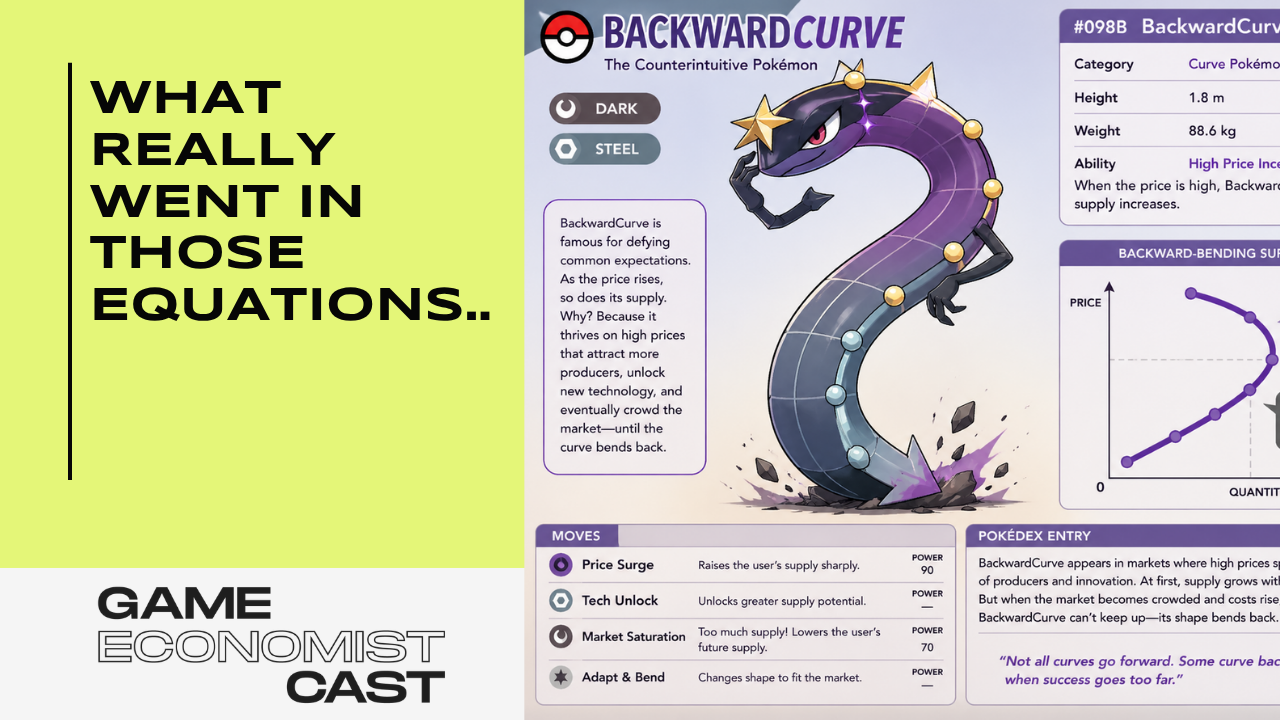
[00:29:26] Speaker C: So I'll start my segment and finish or I'll finish our gaming segments by talking about a game that I've been playing. And that will lead us beautifully into the first topic for the day, which is AI and the gaming labor market and the labor market more generally. I wrote an article recently on my substack that looked at, or at least tried to explore the relationship between AI and even macro, bigger macro stuff in the gaming market on gaming wages and gaming unemployment. So the game I've been playing is a game that I created using Claude code called TurboChess. And thus far within a week I have gone from absolutely nothing to a game that is in dev, but it's hosted online. I have a white list of all the people who are testing it right now. You can play online. There's matchmaking, there's a cosmetic store with purchasable bundles of gems. There's. There's a slight progression mechanic and there's all of chess built into this with variable level bots that you can burst. I built all of this in the span of a week using cloud code. So it's a really incredible, I think testament to, and this was I got my CLOTH membership and then basically immediately started building this. There was quite a learning curve, but I went from 0 to 85 out of 100 in a, in literally eight days. And so, you know, I've got this that I'm working on and I've also had some interesting personal experiences with AI in my own career and potentially hindrances to my career because of the potential of AI. For example, a company saying, well, I don't think we actually need to hire you because we've got this AI tool that do the job. So it started to get me thinking about AI and AI's role in the video gaming market. So it got me thinking about a classic labor economics model called basically the backward bending labor supply curve. And I've, I've got it on this, this article that's on my substack. You can go read it. It's called the Game Industry Labor Market in 2026. And so what I do in this is I try to take as heavy of a data approach as I possibly can with A limited resources in terms of my own time, but also B limited data. And my question is basically what's been the impact of AI, if any, on the game industry labor market? And so I go through and I talk about two KPIs of labor economics as a study. For those of you who don't know, I did labor economics as my degree in my PhD. So this was what I spent a lot of my time doing was thinking about wages and unemployment. The wage is our primary KPI. This is how much people are getting paid. Typically we think about this in terms of annual wages. We don't really do hourly wages as much. And then unemployment. Importantly, there's not just the unemployment rate and number of people are unemployed, there's also the duration of unemployment. How long are people unemployed? That's a very, very powerful indicator. And in our current economy, especially the US economy, unemployment durations have been extending and becoming longer over the last four years. So in order to answer this question of what is the impact of AI on the game industry labor market, we care about those two KPIs. Okay? What's AI's impact on wages? What's AI's impact on unemployment? And most importantly, at least for this article, is what's AI's impact on unemployment duration? And so I have this model that's really, really simple. It's just a supply and demand model. The green line is the supply of labor and the blue line is the demand for labor. Labor supply is the people who are willing to work for a wage. These are your artists, your designers, your engineers, all the different people, the game economists. These are the people who are working for a business. And then the blue line is the people who want to employ or the businesses that want to employ those people. And so these two lines, I'm not going to get into why they're shaped the way that they are. But you can see where they intersect is w1 l1. That's the equilibrium wage and the equilibrium hours worked, or if you would prefer, the equilibrium employment rate. So when we think about this equilibrium, we have to think about shifts in these curves. If the blue line shifts to the right, that's going to increase wages and it's going to increase the number of unemployed or the, the number of employed people. And that's because the demand for that labor has increased. If the demand for something increased, it's pretty natural for us to know that the price is going to go up. In the case of a labor market, the price is also the wage. Likewise, if the demand for labor shifts to the left, what happens? Well, the opposite happens. We get decreased employment and we get decreased wages. And so this is the model that we want to use when we're thinking about the impact of AI. What does it do to the aggregate supply and demand of labor? What does it do to businesses, hiring decisions? How does it shift these two curves? And so we could think about AI as probably maybe having a negative impact on the blue line. Shifting the blue line to the left, this thus decreasing wages and decreasing employment.
[00:34:18] Speaker B: And the blue line being demand for labor.
[00:34:20] Speaker C: Yeah, blue line being demand for labor. And so that's kind of the model that I set out to, to solve, and the long and short of it. And I can get more into the nitty gritty in a minute, but I just want to give the summary for now. The summary is that I don't think that AI has had a detrimental impact on separations, I.e. immediate unemployment rates. You know, the fact that the unemployment rate is rising in the games industry and that wages are stagnant in the games industry, those are the, those are the statistical findings that I've found is that wages are flat or increasing and hours or employment is down. I don't think that that's caused by AI. I think that's caused by structural issues from 2021, where we did a bunch of hiring and then we did a bunch of layoffs. And I'll explain how I'm able to make that determination. However, I think that the impact of AI actually has to do with unemployment durations. We've heard a lot of stories of people being unemployed for 612 months at a time. And in fact, what I see in this analysis is that people in the information technology industry, of which Games are a subgroup, have the longest unemployment rates.
Sorry, the longest unemployment durations of any other industry in the United States. The average unemployment duration for a person in the information industry is actually six months right now. That's up from about four months four years ago. Okay, so we've got this increasing.
[00:35:41] Speaker A: Can you go down one of those graphs? You have these beautiful graphs in here, Chris. Like, you like these graphs you prepared, I think were like some of the best parts of the Storytelling like right here you talk about the difference in unemployment between information and all in the US sector using the BLS data and it tracked when you showed the graph with higher variants for information, which made sense to me, but then like what, what? And I was like, oh, okay, well this is all just bullshit, right? These are people just complaining on Twitter. And then you showed me the second graph and this to me is the key piece of evidence, right, Is like, can we read the jump in 2023 from all time lows? See, I don't know how you get all time lows of around 19 weeks to like 50% increase to 30 weeks of unemployment for people and information.
[00:36:30] Speaker C: It's insane. And you can see it's relatively flat for non information.
[00:36:33] Speaker A: So the red line despite increasing unemployment though, right?
[00:36:37] Speaker C: Decreasing unemployment rates in non information.
[00:36:41] Speaker A: Well, well this is unemployment, the top one, right? And it's showing the red chart is actually trending up the red line for all. Even though that is increasing, we don't see the same increases in unemployment spell durations for all.
[00:36:55] Speaker C: Yeah, so, so the interesting thing here, right, keep in mind, unemployment rates are complicated because there's a whole bunch of different metrics you could use to study the employment status or the employment, you know, of, of a labor market. The unemployment rate looks at the number of people who are unemployed and not and looking for a job and divides it by the working age population. That's going to be different than, or the working, the people who want a job and are of working age. That's going to be different than the employment to population ratio which is just what's the number of people that are employed to the number of people that are in the working age population. Importantly, people drop out of the labor market, people will stop looking for a job and then they're no longer counted in the unemployment numbers. So if you think about somebody who's been on the job market for six months, maybe they say, you know what, I'm just going to start a family, I'm going to have a kid, I've got a little bit of savings or my spouse is going to enter the labor force, they're going to do something else, I'm going to drop out of the labor force and I'm going to, I'm going to do something completely entirely different or just switch to a different industry. So unemployment rates are not the whole picture. And I think the unemployment spell duration is much more powerful here at explaining what's going on.
[00:38:10] Speaker A: I also think we could make an assumption that the bias of people that were previously in games. They've dropped out of the labor force to your point.
So they don't show up in any of this. Right. They're so discouraged they don't even show up because you have to be seeking a job to show up in the unemployment rate.
[00:38:24] Speaker C: Yep, yep, exactly. You gotta be seeking a job. And even for job seekers in the unemployment duration data, you still have to be seeking a job. So. And there are some caveats to how they collect these data. And they have different metrics that they'll interview many different people. But the story here, and you know, for listeners who are not super familiar with labor statistics and you know what we're talking about information. That blue line represents the industry of information technology. The BLS splits all people, all workers in the United States into something like 8, I can't remember exactly. It's anywhere from 8 to 11 different industry categorizations. These are things like construction, farming, healthcare, government.
And specifically we've broken out information. We've chosen information because information contains gaming. Now importantly, information also contains AI, which is certainly going to bias this result. And in fact I would love to be able to split this out by specific gaming jobs. But the statistical data does not contain that level of detail. All you can tell is if somebody works in information technology and whether they're a coder or a designer, you don't know whether they work on video games specifically. So the important thing here is that the trend, at least for the most part, between information and all other occupations is mostly the same. There's more variation in the information industry's unemployment rate, but that's just because it's one single ops, one industry compared to several industries which are going to be a little more stable when you average them together. The interesting insight here, and the thing that I find fascinating is that the unemployment spell duration is statistically significantly different in information compared to non information. And what we're doing here is what's called a diff in diff, a difference of differences. This is an econometric approach where we take two things that are relatively similar in a pre period and we say okay, well for the most part they move together, they're kind of the same in a pre period. And then we say, well there was some event that happened that fundamentally changed one of these and you can call that a treatment. And in this case we're talking about AI and what we're trying to say is, well let's look at, we, we can see the pre Trend, let's say 20, 23 pre to 2023, two trends were mostly the same. Information and non information were being moving around the same and they were mostly the same and they weren't impacted. Importantly, neither of them was impacted by AI. Yet a very important assumption that's made when we do a diff and diff is that the treatment in this case AI differentially impacts what one of the groups and what we're saying here is that AI has an outsized effect on people in it because it basically can do the job of 20 engineers by itself, or at least the job that 20 engineers used to do, you know, 10 years ago by itself. It's impacting the information technology industry far, far more in terms of employment than it is construction or healthcare. It's not that it's not impacting those industries at all. It's just that when we think about employment in these industries, the people working in these industries, AI is going to have a much more impact, much more outsized impact on the information technology industry. So the idea is, well, let's look at the difference in the trends of these two lines after this impact happens, after this treatment goes into effect. And so that's what we're doing here. And the top line, the top, the top graph basically says there's no impact to unemployment. There's no difference really.
Maybe there's higher unemployment rate in information technology than there is in, in all, but there's not really a statistical significance there. It's for the most part it's, there's not enough data to be able to, to tell that. When we look at the bottom graph though, this is much more, this is much more stark. You can see that the red line written the trend, or I've put the trend on these charts as well. The red line is decreasing and the blue line is increasing. The unemployment spells are increasing to 30 weeks in the information technology industry and in non information technology they are decreasing. They've decreased at the beginning of the period from 30 weeks down to 20 weeks.
So in that critical 2023 period when AI really started to take off, you can kind of see this increase the unemployment duration. And my argument here is basically, and it's the same for wages, but in the interest of time I think maybe we'll skip that. But basically the idea is we had a huge amount of layoffs early on 2023, you know, is, is kind of when this, these layoffs started to really ramp up where we lost hundreds or tens of thousands of jobs. Here's the layoffs by years. Our, you know, 2022 we ended up with 8,500 10,000 in 2023. So this was caused before AI was even a thing. This wasn't because AI started to come in and take people's jobs. People were laid off because the video gaming industry had just over prescribed. They had, they had way too many employees and the revenue was not growing at the rate that it was pre Covid. And so this has led to structural layoffs. But AI I believe has led to longer unemployment durations as these businesses try to figure out what they can do without new employees. So instead of opening up a new position again, I've had kind of firsthand experience with this. Instead of opening up a new position, they are seeing what they can do with AI And I think over the next month, over the next several months to a year, we're going to see companies figure out what they can and what they cannot automate with AI.
[00:43:48] Speaker A: So here's what I don't understand, Chris. Right? It's the, it's the constant, you know, economic question of elasticity, where if someone becomes more productive, you actually want more output from them. Like more like holding wages constant. I'd want to buy more widget makers if each widget maker makes me more than they cost. And so you're just telling me that workers went up in value actually because now they have tools. Like they're armed with capital. Remember, like each worker is Douglas proof production function in and of itself and everyone just got more expense or just became more valuable. So, and you're telling me heightened unemployment is press downward pressure on wages. I don't know. That seems like a recipe for employment numbers to go up.
[00:44:27] Speaker C: So that, that was my initial thought as well. I think that when we think about AI as multiplying labor, the value of labor, it's, I think of AI like an oven when you've got, maybe you've got five cooks and only two of them can use an oven at the same time. When you add another oven, all of a sudden your becomes much more, your bakery becomes much more productive. More people can make items in the bakery and they can, they can cook stuff. And I ultimately believe that this is true and I think that this is something we will see over the next couple of years is that the actual productivity of each individual has increased. It hasn't necessarily decreased. The value of people hasn't decreased. That said, there are some skills that would be displaced. And so it depends on the, the composition of skills of workers. I had a chart up here and admittedly this is from. This is From a European study. This is a study of European video game industry folks, people that are employed or unemployed in the video games industry. And you can see this is time to find a job last year by level and percent. So you can kind of see the art and design are up here with the highest percent of their, of their. The respondents had more than one year wait to get a new job. And in fact, 26% of these art and design people found a job in less than three months. Now, art and design is probably always going to be facing this, this issue. This is just a very competitive occupation with lots of people who are very talented. But the important thing to note here is that the impact of AI will not impact all occupations equally. Some employees will become more valuable, some employees may become less valuable.
I think that it also depends on the function.
[00:46:02] Speaker A: Well, you're right about that because Meta's hiring people for like seven, eight figures.
So that this would predict though that the workers in which AI is the most intensive production, raising input would raise wages the most. So where is that? Right? That's software, right? So shouldn't software engineer like some software engineer wages explode?
[00:46:24] Speaker C: I mean, I believe that the people who are going to benefit in terms of employment stats the most from AI are the like. You know, I obviously am an economist, so I think it's going to be economists. But we have a technical skill set. We're able to think technically, we have math skills, we have statistics skills. But now we have this technology that allows us to interact with a product in a way that we've never been able to interact with it before. I think that the value of really, really good analysts has just skyrocketed.
And the value of data engineers whose job is to build and maintain one data engineering infrastructure, like why do I need, let's say I have 10 engineers who are maintaining my data infrastructure and my company's not growing, or at least I don't have more data coming in. If all of a sudden I have a technology that can have one engineer do all of that maintenance, that is, in my opinion that's an employment destroying case where maybe the number of those data engineers has decreased because one can do the job and the person who keeps the job is the most effective at using that. When you think the production side of the business, when you think about creative side of the business, this is where I think that there's going to be potential job creation. When you can hire teams of people that are super powered with these tools and you can have, you know, 20, 30 different teams that are maybe a little bit smaller that are all working on these very interesting projects that would normally have had to been done by 2030 people are now being done by 5 to 7. So I think I'm very, I'm very positive on people who have a technical skill set but also very, very, I don't know, results driven and revenue driven. People who are able to translate product into money are going to be the people that benefit from this.
[00:48:02] Speaker A: Can we also make this a shout out for like better employment data on the games industry? Because like whenever those Matthew Ball numbers on unemployment are reported, it's never clear to me whether or not employment numbers themselves are going up. Because you could have a fixed, you could have the numbers go up and then if you just have a steady amount of turnover in an industry then this could be completely normal given the volume. I mean I don't think it is just to be clear, but it's so hard to contextualize. Okay, what does a hundred thousand layoffs mean? What does the global industry for employment numbers? What does that break down in North America? And it's, I will tell you, I've tried to find this. It's not easy to find. There's very little you can get to your point. The BLS has strange categorizations. There's so many rules about whether or not, okay, what do I do with Microsoft? Okay, Xbox is like a part of that now. That includes Activision. Like it's just, it's never as easy as you think. And it's like, okay, well does HR get categorized in there? So there's, there's so many choices. There's a garden of forking paths. So it's hard to know what's been happening to employment numbers and it's, it's very hard to know what's happening to wages. You know to your point too, they're like, it feels like labor is so opaque for this reason.
[00:49:07] Speaker C: Yeah, I saw three different layoff numbers when I was looking at the layoff number. I decided to go with the Ball numbers just because he's probably the most popular person in the space looking at these numbers. But I saw, I saw bigger numbers and I saw smaller numbers for this five year span. And yeah, I mean the data is terrible. And part of that is because we've got a bunch of publicly traded companies that do not want their data being accessible whatsoever. Even if that's employment data. They report that they are laying off X number of people, but they don't report anything beyond that. And we don't even know, who knows how many of that X truly gets eliminated. Is it more, is it less?
Epic just announced what, a thousand? How many? Crazy, like an insane number. Number. Yeah.
[00:49:53] Speaker A: Well, speaking of employment, what about employment in virtual worlds?
[00:50:04] Speaker C: Employment in virtual worlds? Maybe all of the, maybe everyone's gonna, they're gonna move from the video games industry into the actual video games jobs and become employed there.
[00:50:13] Speaker A: We are of course talking about Edward Castro Nova's paper on virtual economies. This is one of his earlier ones, but one of his most important ones. He's constantly making the case that first of all, you gotta remember he's publishing in academia. So the first thing he's arguing for is like, hey, can people please take games seriously? Which I think we can all agree with. Academia certainly doesn't. And I think the interesting part of his argument is that like, look it, if you have these digital games and they start having a lot of money that's being transacted inside of them, if people are also willing to make trade offs for things in these virtual worlds and they're willing to trade, then you have to take that thing seriously. And if more of the virtual world grows and given its capabilities, more of the things we care about as human beings are going to take place in the virtual world, more value is going to be imbued into them because we care about our status, we care about politics, we care about the economics of those virtual worlds just as much as the real ones. Again, the fundamental fallacy that everything revolves around like needs is very, very much not necessary here. Seeing people, people value trade offs, they have unlimited needs and wants. Remember that you got to allocate time, that's the scarce resource. And so the thing he gets more specific on is to really think about what drives people to games and what drives people to allocate between games. And so he develops a model and essentially says that like we can think about utility or satisfaction in games as a function of the reward you get by playing the just the reward. I don't think that's a, that's not an explicit reward. That is also an implicit reward. It could be utils. And then he subtracts the reward you get from what he calls the challenge. So what the game has, we can think of that almost as exogenous. And then every player's preferred difficulty window. So there's some difference between what the challenge the game provides is and what the player wants. And then we subtract those two together and we also square it because he basically wants to solve for like overshooting and having a negative term or a positive term. And that's. By the way, that's what happens when you see squaring in these formulas. That's what you're trying to do. And so that. This is it, man. We've. We've discovered it, guys. Let's pack it up.
[00:52:15] Speaker B: I thought this was trash, but really,
[00:52:19] Speaker C: I mean, it's just a utility.
[00:52:20] Speaker B: He's like, why do people play games when the games are hard? It's like, bro, like, I don't know.
[00:52:27] Speaker A: You gotta understand.
[00:52:27] Speaker C: There's so many seminal, though, like, nobody had ever said anything like this.
[00:52:31] Speaker A: No, I disagree with you, Eric. I think that's a. That's, that's not obvious to me. I think that needs to be stated. I think that needs to be modeled. Right? Because that also lets us see.
[00:52:39] Speaker B: Okay, but this model purely has a single component. Okay, maybe I'm just. Look, I think the papers is all. Lots of interesting things. This part just felt like he felt like he needed to stick some math in there.
[00:52:49] Speaker A: I mean, he does. I'm okay with that.
[00:52:51] Speaker C: I don't know. I don't know.
[00:52:53] Speaker B: I think I ignored this section and the rest of it was totally fine. Here's what.
[00:52:57] Speaker A: No, no, no, no. Because here's what he's saying, Eric, right? He's saying that because this matters for the substitutes.
[00:53:03] Speaker B: You want a game that's not too hard and not too easy, but, but see, that's.
[00:53:06] Speaker A: That's laying down. He's also saying that this is one of the most important factors from a game like he's building. He's saying it's uten. It's a utility function. And one of the key components is not just utility, but this concept of difficulty and challenge.
[00:53:18] Speaker B: And I hear people, is totally huge, huge components of what games are. The audio, the visual, the fantasy, the ux, the present. There's so much more.
[00:53:29] Speaker A: Sure, sure, sure.
[00:53:30] Speaker C: Pictured in R.
Yeah, that's all captured
[00:53:33] Speaker B: in R. All of that is just,
[00:53:35] Speaker C: just R. The reason this matters is
[00:53:37] Speaker A: because utility function, magic wand, boom.
[00:53:40] Speaker C: No, no, no. But really, like. Okay, so I, I think there are two major points. First of all, yes, he adds math because he's trying to write for an economics audience. They economists think in math terms like they just have to see an equation so they can see how. How does. How does F of X change when X does, you know, goes up or down? So that's, that's the first thing. It's very, very helpful as a model for somebody to be able to see it and Know how it behaves.
[00:54:04] Speaker A: Correct.
[00:54:05] Speaker C: The other very important part that he's trying to point out and the reason he focuses so much on challenge is that in the real economic world, people don't like challenge. They want to minimize as much of work as possible and maximize leisure. And they would like an infinite wage so they can work zero hours and all the rest of their hours are spent on leisure. And this is very counterintuitive to an economist, a traditional economic framework. And so he has to establish the fact that, hey, there's actually, there's some gain to this effort because he's got a. He combines this then in this big labor supply function that says, okay, here's how people allocate their hours towards game A and game B and work. Why would somebody spend time doing something that's unpleasant or requires effort? That's the purpose of this utility function.
[00:54:49] Speaker B: Well, those are two different things. Unpleasant and requires effort. A lot of things that are pleasant require effort. Okay, why do people learn how to play an instrument?
[00:54:57] Speaker C: I think requires effort is probably the better term.
[00:55:00] Speaker B: Anyway, I don't want to get distracted by this. I think the rest of like, I feel like he doesn't actually use this that much throughout the rest of the paper.
[00:55:06] Speaker A: He doesn't, he doesn't. I don't think this is irrelevant. It doesn't connect to anything. The thing he does next though is he basically just does your labor leisure equation, but you're just choosing between substitutes where he's saying, look at, you're going to allocate your hours across each game based on the satisfaction each game produces. Well, yeah, right. You can assume diminishing marginal utility for each of the games. Okay, well, that means I'm going to alternate between games. That makes sense. Makes, makes sense. Okay, sounds great. Extends the model forward, starts talking about work versus time, which I think gets a little bit more into the labor questions, which is that games. And honestly, again, this is just an entertainment model. And you can just argue that like games increase opportunity cost to not working. And so the thing that can also happen if that's the case though, is it can mean that you'll shift your labor to leisure if leisure becomes more valuable, holding all else constant. And he also brings up this idea of the backward bending supply curve where wage could be so high, which labor economists fucking love. It's one of the graphs Chris had where your wage can be so high you actually don't work more hours. Like if I gave you a hundred million dollars or bajillion dollars, you'd Only work one for one hour. Maybe you wouldn't work a bunch of hours. Which like.
[00:56:13] Speaker B: Do you think we see this empirically, that that game demand is higher among the ultra wealthy and ultra.
[00:56:18] Speaker C: It's a very, It's a very contro. Oh, gaming specifically. I was going to talk about that.
[00:56:23] Speaker A: I actually think this is true, Eric, because I think, I think that's the free to play revolution. I actually think you can use this to explain the free to parade revolution, which is that if games are increasingly valuable, opportunity cost, if you essentially add a multiplier on that and let you express your wealth in the game, if you express your wage level in the opportunity cost game, then they actually multiply each other together they become complimentary goods. And I think that's what free to play has unlocked.
[00:56:51] Speaker C: Well, there's also.
[00:56:51] Speaker B: When you hear about these like ultra wealthy Saudi princes who spend tons of money in these games. Right?
[00:56:56] Speaker C: Yeah, I was going to say like the minnow whale thing, you know, all the minnows are playing the hours and all the whales are spending the money. But yeah, this U shaped thing is really interesting. And the reason for that is like, so what this is saying is that the demand for the game is very high at very low wages. It decreases at medium wages and then increases again at super high wages. And the reason for that is that the people with the super high wage can afford to pay for that enjoyment. They have more than enough money than they need. And then the people at the very low end of the spectrum, they have a very low opportunity cost of time. So they're like, well, should I spend another hour working for eight bucks an hour or should I just play this game? Because the opportunity of cost of time is. And so it actually decreases as your wage becomes higher and then it starts to increase again as you become wildly wealthy.
[00:57:42] Speaker B: This idea of games competing with jobs is interesting because I think there was that study that showed that, that claimed that male, young, male employment was down because video games were so fun. I didn't see this in that paper. They called it leisure technology, like a, you know, a capital effect on leisure, which is modeled differently. But. But yeah, basically games are so good that people would rather play games instead of work.
[00:58:04] Speaker C: Game over. We did it.
[00:58:06] Speaker A: I think he gets a little bit crazier in the latter part of the paper.
[00:58:11] Speaker B: Yeah, this is fun though. Let's talk about this. This is fun.
[00:58:13] Speaker A: All right, well, go for it. Talk about the macroeconomic question.
[00:58:17] Speaker B: Oh, you want me to jump into this?
[00:58:18] Speaker A: Please.
[00:58:19] Speaker B: Yeah. Okay. So Castrova's writing this in 2003. This is kind of the heyday of the MMO request I think World Warcraft came out later, but the heyday of the mmo. So he's very focused on virtual worlds, which is, which I read as MMOs.
And he posits a few things, right? He, he notices these things behave like little self contained economies. You know, things have value and there's markets and shit. And he points out that basically people have no property rights in these systems. The, the game developer controls the game and they can just delete your inventory with, by changing a zero to a one and you have no real recourse besides just getting mad and complaining. And basically these games behave like little dictatorships and they're, they're trying to do right by other players. They've got customer support teams and help them. But he posits this prediction that at some point people might be able to take assets between MMOs. Like you know, maybe if you're high level in World of Warcraft, Final Fantasy is trying to attract new players. So they say, hey, if you're at max level in World of Warcraft, you come in max level at Final Fantasy, you know, maybe as a user acquisition play. He theorizes this. And then if you can transfer property between games, all of a sudden you like, you know, what are the legal rights of this? You know, maybe the government needs to step in, what's going on? I think that, and then he, he kind of extrapolates that to all sorts of like really interesting philosophical claims about the government. However, I think that first point of transferring assets between games never happened. I think players still basically don't own jack shit in their games. Like I have a bunch of skins in League of Legends. If Riot takes those away from me, like I don't, I don't own those, right? Riot could delete those skins and I, the most I can do is just get mad and complain. So I think that he over emphasizes the importance of MMOs and he overemphasizes property rights that kind of never materialize. But the rest of it I think is super on point about, you know, like this is a economy and you know, you see all these phenomenon up here. So that I think, I think I went too critical.
[01:00:07] Speaker A: No, no, no, no, no, no. I think that's super interesting. I would say the question is, is like why does any of the producers or even the demand from consumers first of all want interoperability between games? And I think you provide an interesting answer which is that they want to acquire users from other games. And so like we'll status match essentially, which is actually something airlines do. So there's some empirical evidence of this. But I think the problem is that the switching costs to understanding the new paradigm can be very high. And I also think, like, if we go back to his equation though, Eric, it was about finding the optimal level of challenge. Like that was one of the things. It was this vague reward function subtracted by the difference from what you want the challenge to be and your current challenge level. How do you map that offer onto his, his proposal? I don't think you can. Right. Does it change the challenge? Let's say, let's say I'm level 100 in Candy Crush and I can be level 300 in Gardenscapes. I don't know, man. Like, it's your point. He's writing about MMOs and it's like a lot of power progression and so the path dependency is lot stronger in those games. So I can imagine, like the switching costs again, are much higher. But again he's, he, he only is talking about this one type of game. There's so many other games. MMOs are extreme minority.
[01:01:24] Speaker C: I mean, I think you probably, I think any game where you are able to see other players, at least see a visual representation of another player, whether it's Fortnite, whether it's Turbo chess where you can have a special, you know, your own, you know, avatar. I think that this still applies, this framework still applies because he's more, he's interested in, you know, he, he actually wrote a book called Exodus to the Virtual World or something similar. And he's interested in this idea of. And, you know, he wrote this in 2002. He started writing this stuff in the 90s. This was, this was when video games, these MMOs had less than, you know, less than 5 million people playing them across the entire world. And what he's interested in is this idea of what happens when a billion people are playing games. What happens when. What happens when a large percentage of the population is now spending their time in an environment where marginal cost is zero and the government within these environments is completely dictatorial? I mean, it's code. It's a person launching a new update. I think he's got a lot of interesting philosophical questions there. I think it actually hinders his argument when we're thinking about economics, like the economic literature, because economists don't really care about an environment that doesn't abide by. It's like, oh, well, you've just proven why I shouldn't care about this because the laws of economics don't apply. You have zero marginal costs. You can do price controls, which don't work in reality.
[01:02:49] Speaker A: So the thing that would naturally lead me to lead credence to his idea that pro property rights could emerge is if you spend more time on one platform, you're investing more and you want to know your time horizon is secure. The same thing we think about growth theory is that you have unstable governments. You don't want to invest because you know the neighbor can come take your shit. Like that's a problem. And so like the state becomes an enforcement mechanism. And I can like property rights. Property rights have to be enforced by the state, but they are protection. They're protections from confiscation from your value being confiscated without your notice. They give you autonomy over a unit of good. You can't just, if you have property rights, you can't just like take someone's land, right? You have to treat it, you legally own it. There has to be voluntary consent of transfer. That to me, is just a key part of that. But this really hasn't spread in games. This, to me, is the problem. I think Roblox is an example, but I don't think that the most popular games, all of them, have property rights. Like, you almost have very few property rights in any game. And not only that, like some games, they can change the nature of your property, right? Like, let's say you play Magic the Gathering, you can have a card that's available to use in a mode and that card could actually get rebalanced so the stats could change, which I think we think is okay for that to happen. Like this happens in Magic The Gathering and Web3CCGs. And also, like, the format the card can be played in can be also changed on you. And so I actually feel like games are fundamentally incompatible with a strong version of property rights.
[01:04:11] Speaker C: I mean, all of digital, the whole digital economy, Spotify, Apple Music, Netflix, all of these things are streaming. You don't own anything anymore, you know?
[01:04:19] Speaker A: Yes, I don't think.
But owning, owning from an economic sense is just zero marginal cost on repeat viewing in a digital sense, right?
[01:04:28] Speaker C: And then maybe nobody can take it away from you.
[01:04:32] Speaker A: I think, like, then you get into some thorny philosophical issues, which is that, okay, eminent domain exists in the United States.
What if I create a clause in the contract where if the price of the property goes above a million dollars, I repossess it? I think, I think you can have. You can contract that away.
[01:04:48] Speaker C: Well, I wouldn't dare, dude.
[01:04:50] Speaker A: Dude, dude. You're walking into a whole libertarian debate about whether or not you can sell yourself into slavery.
You know how many college nights I've spent arguing with libertarians about being able to sell yourself into slavery?
[01:05:02] Speaker B: Like, like, should you be able to. Or like.
[01:05:04] Speaker A: No, no. Like literally. Can you? Can you? And then should you be able to
[01:05:08] Speaker B: like people in our current system or in an ideal libertarian, Just like literally,
[01:05:12] Speaker A: literally it is even possible for you to sell yourself into slavery. Like you can say you're doing that, but is that actually what we mean
[01:05:19] Speaker C: when you sell yourself?
[01:05:21] Speaker B: I don't think you can. Yeah. You're also not allowed to kill yourself. It's illegal, Correct?
[01:05:24] Speaker A: Well, it's not a valid contract the state will uphold. But people are saying even if the state would uphold it.
[01:05:29] Speaker B: Yeah, well, because if you're trying to kill yourself, then you're like trying to commit a crime and they can like, like seize your rights and shit. Yeah. So yeah, I think you're not allowed to be a slave. I think that's illegal to be a slave.
[01:05:41] Speaker A: Let's not, let's an open libertarian debates.
[01:05:43] Speaker B: I do want to touch on something Phil though, is that there aren't like, like legalistic contracts, but a lot of these game developers behave like there are property rights. Like in a lot of these games, when they take away something, they feel compelled to compensate players.
[01:05:56] Speaker A: Eric, here's what I would challenge you with. Can you model that for me? How do we model that?
[01:05:59] Speaker C: That.
[01:05:59] Speaker A: How do we model the inclusion of property rights?
[01:06:01] Speaker B: Okay, so, so players have, let's say they own items, but there's some uncertainty about their future utility of those items because they're uncertain whether they'll get seized or not. The game developer can affect their future prediction of how likely their items are to get seized or deprecated or whatever.
[01:06:18] Speaker A: Yep.
[01:06:18] Speaker B: And the game developers actively trying to increase the longevity prediction that the players have. Like make it seem perceived that whatever you get will be valuable in the future. And even if we take it away from you, we'll compensate you. So, you know, don't be afraid of, you know, the ship sinking in the future. It's not going to sink. We're not going to steal your stuff.
[01:06:37] Speaker A: So let me, let me throw something at you.
[01:06:38] Speaker B: So it's like a game theory reputation thing.
[01:06:40] Speaker A: So my, my boss at Amazon Games, this guy named John Smith, he, that's the actual name and I, he always had this very interesting thesis that there's this thing called a player contract. It basically is similar to the Hobbesian social contract. It's invisible and you implicitly have it. It's tacit, it's TAC consent. Consent, I think it's Montesquieu. So you have tacit consent with your players about certain property rights. So it is true that you could unilaterally amend the implicit promise. But do you think developers should do that to protect property rights? But then I don't know, I'd take it one step further. Do you think you should contractually bound yourself almost like a self commitment device to those rights?
[01:07:17] Speaker B: I think if you're the game developer, you don't want to write it down because then it could backfire on you pretty hard.
[01:07:22] Speaker A: Yeah, but what about the guarantee man? Like you're basically saying that like Cuba should never give its citizens private property because it always wants to reserve eminent domain.
[01:07:30] Speaker B: Yeah. So I think like this gets into like state size and capacity and stuff. But like I think the pattern you see is that in a small, kind of a small company, small state, whatever.
[01:07:41] Speaker A: Right.
[01:07:41] Speaker B: Like things are more in flux, more constantly and so they're just kind of like whatever. We'll, we'll all try to act in the best interest, even if not everything's codified. And the bigger and more sprawling and bureaucratic or confusing the organization of society and people gets, the more you need explicit rules and legalism and stuff. So I think game, most game companies are small. They're small relative to cities, states, countries. And so that's why they play fast and loose with laws and you don't really need laws unless it's like a giant system.
[01:08:09] Speaker A: I think that makes, I think this explains a lot of like why no one gave a shit about decentralized autonomous organizations. Like that was kind of the attempt of this, that this was, this was Web3's false promise is that they were going to give you property rights and they gave you, they gave you the property right to buy and sell something with verifiable scarcity and you technically have the blockchain chain contract. Like you could make a smart contract where you could say you retained. Actually I don't think you could do this where you could say okay, I give you an item, but let's say the price of bitcoin goes above a hundred dollars or the 1 billionth bitcoin is found or mined, then I repossess that item. I don't think you could take things out of people's wallets. This is what I forget you could do.
[01:08:50] Speaker B: You could create probably an options contract and then it creates a wrapped Bitcoin or something that could be seized. Like there's, there's layers.
[01:08:57] Speaker A: You could do okay. You could basically stake things in the nft. There are ways to solve this.
[01:09:00] Speaker B: Yeah, probably. It's not exactly. Yeah, Chris would know better.
[01:09:05] Speaker C: No, you could do everything that they wanted to do. It's just that I don't think that.
And I, I to this day don't know which one happened first. Which one happened first. Did gamers start to just hate blockchain and get away from it, or did blockchain send this thing to market too quickly before this stuff was ready? I think it was a little bit a combination of both. But the reality was, for one reason or another, even though gamers say they care about these things, they did not ultimately care about it when the market presented it to them. They say they care about. I want to own my stuff in League of Legends. I want to own my stuff in all these different games. I want to be able to have this sacred digital personality, the sacred digital entity. And there was an industry that tried to offer that to them. They didn't do a good job, but they came close and they completely rejected it.
[01:09:55] Speaker B: I think the truth of the matter is people don't care about property rights. They care about bread and circuses. You know what I mean? They just. As long as the game's entertaining and they're happy, then they're fine. Yeah, at the very end, I think one of your last slides, he has like four points about how game economies are different. I thought those were really good. So I think Castrova this paper, I know I've been criticizing it, but like he did, there's a ton of super insightful and prescient stuff in here. This is think three things he points out that I thought were really interesting. One is that price controls work better in game economies than they do in real life. Because in real life you've got quantity issues. You have to get rid of excess goods or deal with rationing. Games can just, you know, with a flip of a switch, mess with supplies. So basically, price controls work better in game economies. And empirically we see a lot of like price ceilings and fixed prices in even in MMOs.
The second interesting point he points out is work. Work is good. Players want to be on, engaged on quests and in fact they'll churn and quit your game if you're. It's too idle and there's not enough to do. This kind of goes to the difficulty point or the challenge point, which is, and we see this emerge in Free to play games where they're always giving you quests, like little things to do, keep you busy, keep you coming back, because if you stop having tasks to do, you're gonna quit. And then his third insight, which was interesting, this is more MMO specific, but growth can be bad. If you increase per capita wealth in the MMO context, this will lower the challenge level of the game. And this is basically runaway hyperinflation that we see in lots of games struggling to deal with where as the economy gets mature, mature, you know, players have so many of some resource that something becomes trivial and it kind of undermines the game loop.
But yeah, I thought these were really interesting and accurate predictions for the most part.
[01:11:28] Speaker A: How would you make this a falsifiable hypothesis? I feel like all of these four points are basically falsify hypothesis. Players can choose identities, capacities and even multiple selves. I actually don't. I think this is the only thing he gets wrong is that yeah, autonomy can be very constrained and still be very effective.
[01:11:44] Speaker B: I find that last one related to the property rights thing like it just didn't happen.
[01:11:48] Speaker A: I agree with you on the other part. Like growth can be bad if you reduce challenge. If you shout too many. I think that the thing, the thing he doesn't spend a lot of time talking about is what is challenge in these games? Is it cognitive challenge? Is it collecting enough resources?
How do we understand challenge? I think is something he. I wish he spent more time discussing.
[01:12:07] Speaker C: I mean, he pro. He probably hits on that more in the future. But that's. That's kind of. I feel like that's up to the game designers. A lot of, A lot of the game design books cover, you know, this like challenge curve. But yeah, it's kind of. It is fun to think about an experiment for each one of these. Work can be good. Players need meaningful tasks or they get bored. Like, you could really easily run an experiment in a video game setting. And if you make these, and this is where like the relevance, the broader literature becomes very, very visible. If you can just generalize these statements to economic agents, then all of a sudden it's much more interesting. It's like, oh, we were able to show that workers need meaningful tasks or they get bored. That's a lot more interesting to a labor economist than players now you just replace one word and all of a sudden it's a completely irrelevant and valid research question.
[01:12:58] Speaker B: Do you think that's true in real life? Do you think managers will give workers nonsense tasks just to keep them busy so that they don't have nothing to do.
[01:13:04] Speaker C: Do. Well, I think the critical part is meaningful tasks. But I, I, I do, I think that there's a lot of busy work that is done.
[01:13:13] Speaker B: I find when Claude comes back to me and says I'm done, I feel compelled to tell it to do something even if I have nothing for it to do.
[01:13:19] Speaker C: Yeah, exactly.
[01:13:20] Speaker A: I agree. You want to keep it busy. You feel like there's, there's like basically slack on the line that's not being, there's, there's a productive capabilities. So here, let me ask you, let me ask you another thing, guys. So if he's saying that satisfaction is driven by this function, why can't we say the same like a labor retention job satisfaction? Can we also do the exact thing you were just mentioning, which is each employee has its own challenge level and you have their ideal level of challenge and that's what devises it. Why shouldn't we reshape labor economics and look at player or worker incentives in this lens? Like the principal agent problem? Isn't this how we actually, I mean,
[01:13:54] Speaker B: don't, don't people do this? They, there's like a sort of matching based on what people like to do. Right? Musicians will take a lower wage because they like the work.
[01:14:02] Speaker A: But we need, we need.
Yes, but I think. Are you saying that the challenge function is embedded in that decision?
[01:14:08] Speaker B: Yeah. This challenge, you can abstract it to a preference function.
[01:14:11] Speaker A: Right?
[01:14:12] Speaker B: This challenge minus W. I think that's
[01:14:14] Speaker A: weak though, because he's talking about the optimal level of challenge, not like the optimal level of preference.
[01:14:18] Speaker B: I think this is a one dimensional model for a many dimensional system.
[01:14:22] Speaker C: There's a whole literature in economics called mismatch and there's multiple types of mismatch, but one of them is in labor economics. And it has to do with this idea that each firm, you can imagine a firm has some characteristic, whether it's like technical rigor or creative on the one end and technical on the other end. And each worker also has that same metric and they have this difference mechanic, just like C minus W and that's the match.
So the closer, the smaller the gap is between your preferences and the firm's preferences or the firm's. What the firm has to offer, the smaller is that gap and so that becomes zero minus.
[01:14:59] Speaker A: I don't agree that, I mean, don't be wrong. Preferences exist. But I think he's modeling something fundamentally different here, right? Which is like you can be a software engineer and we can think of a different variable besides preference that Describes your level of challenge, like the amount of work you have to do. Like the level of cognitive complexity. Like, I think there's just a lot more richness.
[01:15:19] Speaker B: Is that not a preference? Like how hard I want to work, how much I want to about think, think.
[01:15:22] Speaker A: Yes, but the thing to keep in mind is that W here is the preference parameter. Yes, but what I'm arguing is that challenge C is exogenous and is something the employer can control. Like you can control the level of challenge you give to an employee. And so that would.
[01:15:38] Speaker B: Yeah, so companies do that by like company culture and shit like that. Right. Like how do you make.
[01:15:42] Speaker A: But I, I don't think companies spend enough time thinking about how they optimize challenge for the employee. You do not see the same level of impetus from a firm when they feel like you at employees under challenged versus over challenged. Over challenged means your satisfaction goes down and you're likely to churn. And so does under challenged.
[01:16:00] Speaker C: Yeah, that's interesting. So you're thinking about measuring. We've got two workers of that are identical and they both have a productivity Y.
And your idea is we're going to present them with two different difficulty levels and we're going to, we're going to have one with difficulty level 50th percentile and then we're going to have another one where we just slowly ramp it up. And we're kind of testing the sensitivity of that. We're interested in the elasticity of the production. Yeah, the production elasticity of work difficulty or challenge.
[01:16:32] Speaker A: Yeah. And I think one of the things that would pop out though is that for some employees, I'm not setting the optimal level of challenge. And if I gave them more challenge, their satisfaction would be higher. And so I don't want to maximize their satisfaction. I want to maximize firm satisfaction. But that also implies like higher challenge means potentially higher output.
[01:16:50] Speaker B: I mean, having season this phenomenon where there's like a really talented young employee, they're not being challenged enough and they find more work to do, they find more responsibility, they look for promotions. So that this is. It's not the firm optimizing, it's the, the agent here who's optimizing for their own satisfaction. They're saying, I will increase C to make myself happy.
[01:17:07] Speaker A: Well, well, here's the other thing that I think is embedded in C, which he doesn't show, is that wages tend to move with higher challenge too. Like, that's one of the benefits to payoff of having a higher challenge is that if I increase wages holding all else constant I perform more C because C becomes an expected value on wage
[01:17:26] Speaker C: yeah so for hiring or for company structures encourage people to take on additional work or encourage cross collaboration would that be the learning?
[01:17:36] Speaker A: Yes tie challenge and wage together make sure you're handing the appropriate level of challenge to each employee would be another one and too little challenge can also have them churn like those to me are ironic insights that you might get out of this model that you wouldn't otherwise have you heard it here Anything else gentlemen?
[01:17:54] Speaker B: Yeah or my 2 hard stop is I got to prepare what I'm going to do for this vibe coding session.
[01:17:59] Speaker C: You have 15 minutes vibe code it that boom done.
[01:18:03] Speaker B: I'll see you guys. Hey Chris, let's play chess again later.
[01:18:06] Speaker C: Yeah sounds good.
[01:18:08] Speaker B: We should teach this to our children.
[01:18:10] Speaker A: Economics is major major, major major Everyone has to major in economics number one
[01:18:17] Speaker B: for personal survival economics is major.